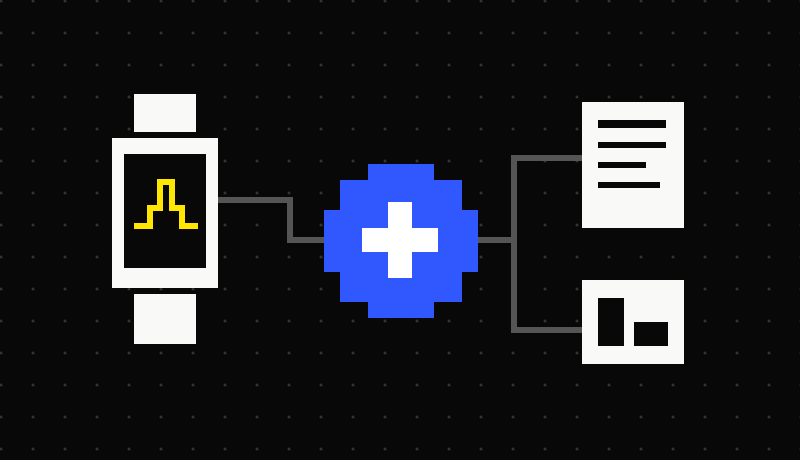
HexCare goes back to my time at USC. Wearables were collecting health data, but each device had its own app and its own view of a person. We wanted to bring that information together so it could be useful beyond the device that collected it.
Fitbit, Jawbone, and a demo night.
In December 2014, our team showed HexCare at LavaLab’s Demo Night. The early product collected data from devices such as Fitbit and Jawbone. We also met with doctors and other medical professionals at USC’s Keck School of Medicine to get feedback.
The Daily Trojan’s coverage still has the team and the original pitch. It’s a useful reminder of where this started: a student project trying to connect consumer hardware with something people in healthcare could actually use.
Getting it out of the classroom.
HexCare received $7,500 in USC’s 2016 New Venture Seed Competition. That year’s competition had 213 applications; USC’s write-up names Chad Martin and me on the HexCare team.
I also gave a talk at BIL Los Angeles in 2016 called “Data Saves Lives.” The recording is still online. It captures how I was talking about the idea at the time.
 WATCH THE 2016 TALK
From device data to research.
By the October 2017 rebrand to Qolty, the product had become a mobile clinical research platform. The relaunch announcement describes wearable integrations alongside journals, surveys, and prompts sent during a participant’s day.
That combination matters. A wearable can record activity; a person can report pain, symptoms, or how they’re feeling. Collecting both gives researchers a way to study how those things relate over time.
One example was a pain journal that recorded location, intensity, descriptions, and medication context. Another was experience sampling: asking someone about their state during the day, rather than relying entirely on what they remember at a later appointment.
The project changed shape, but the underlying question stayed familiar: how do you turn a collection of measurements into something worth understanding?