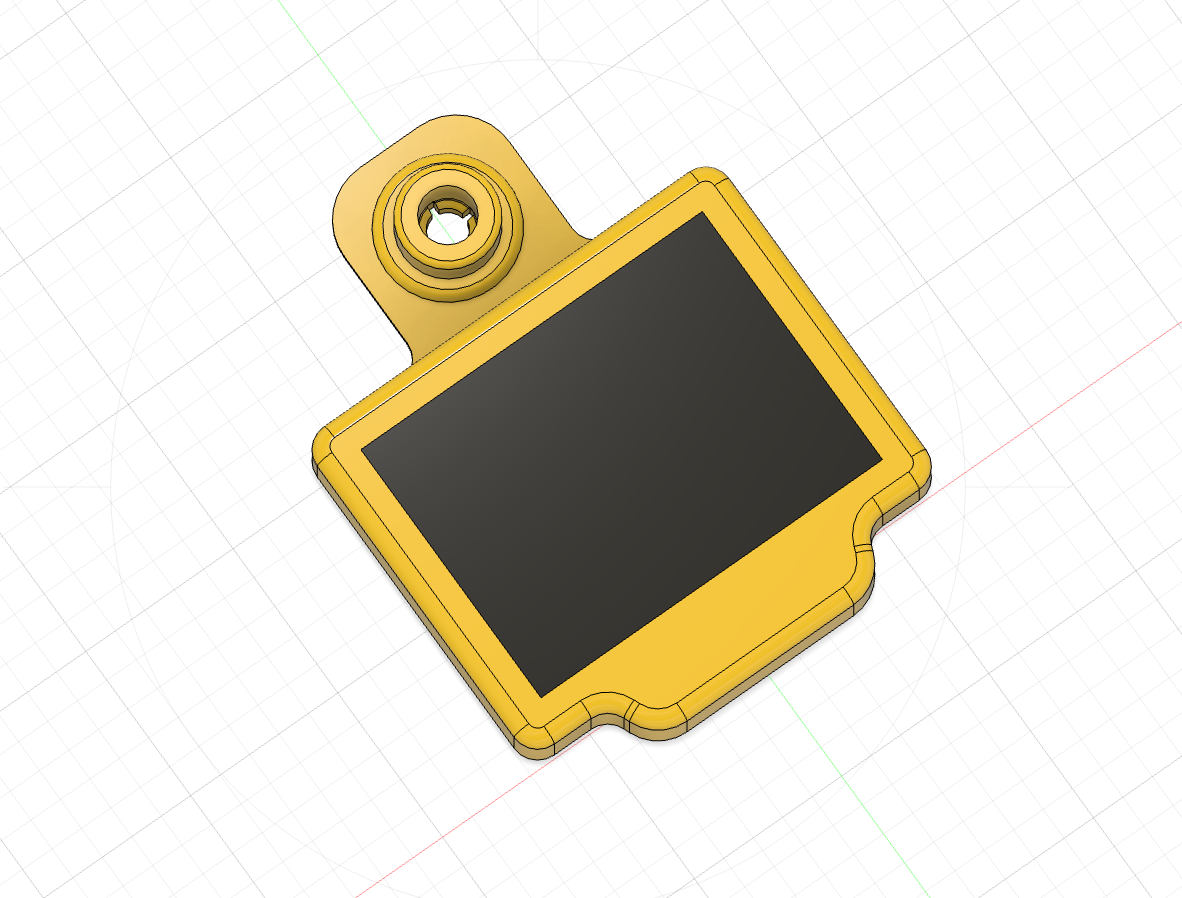
I started building a solar-powered satellite cattle tag to help my grandma manage her cattle ranch. That sent me into PCB design, satellite communication, and the surprisingly complicated problem of keeping a small computer alive on a cow.
The goal was straightforward: know where the cattle are and get a better sense of how they’re moving, even away from cell coverage. An ear tag seemed like a good place to put the hardware. Small enough to go with the animal, with a solar panel to keep the battery topped up.
A computer in an ear tag.
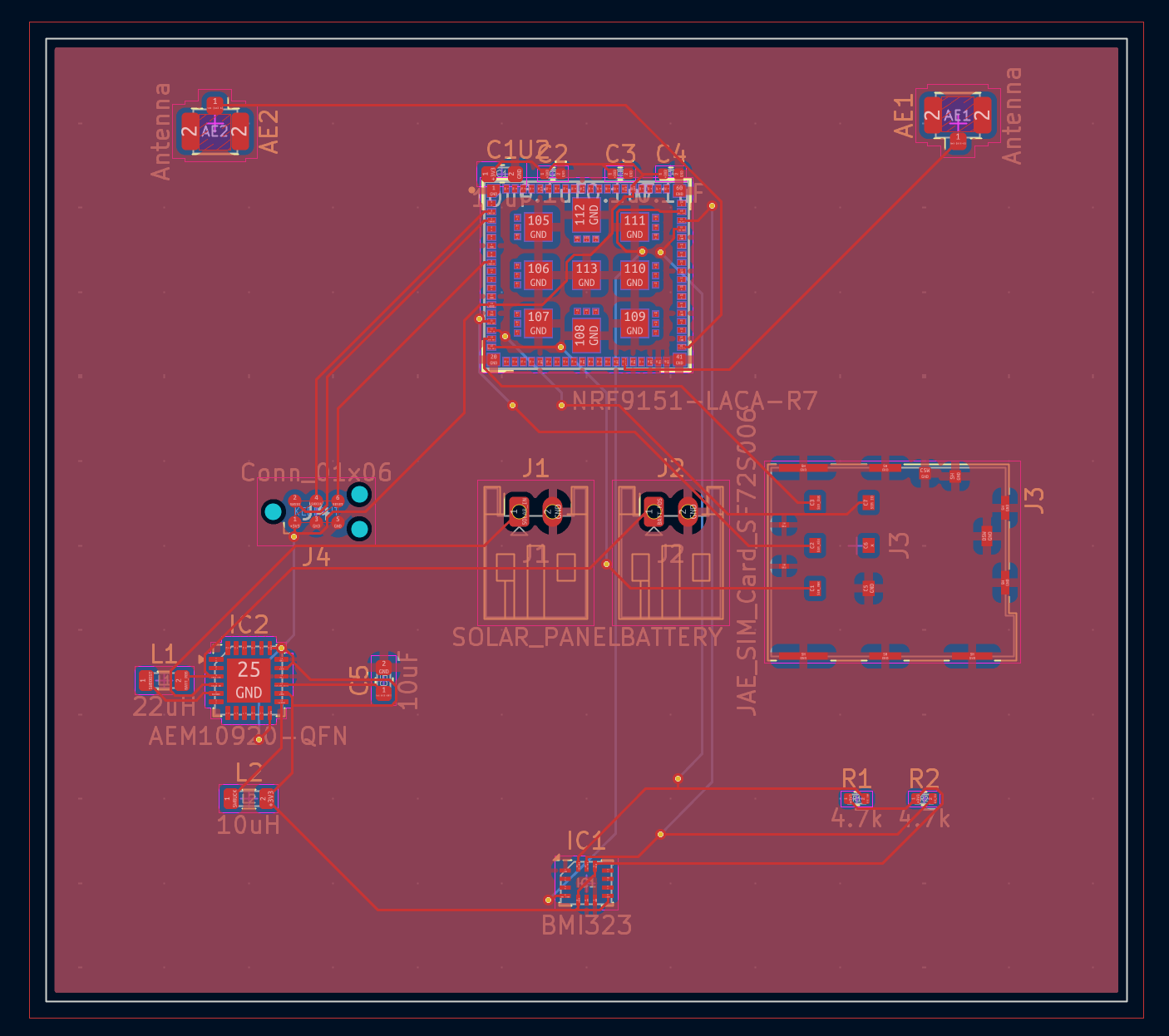
The design brings together a Nordic nRF9151 modem and processor, satellite positioning, a Bosch BMI323 motion sensor, and a solar charging circuit. Position tells you where an animal is. Motion adds another signal: whether it’s active or resting. Turning that signal into a useful behavior estimate is a separate problem.
I learned how to take a schematic—the electrical connections between parts—and turn it into a printed circuit board. That means choosing footprints, placing components, routing traces, and leaving room for antennas, connectors, and the enclosure. Everything has to fit, electrically and physically.
Sunlight is a budget.
A solar panel doesn’t make power management go away. It makes it something you have to plan around. The tag needs enough stored energy to get through darkness, shade, and time spent trying to establish a connection.
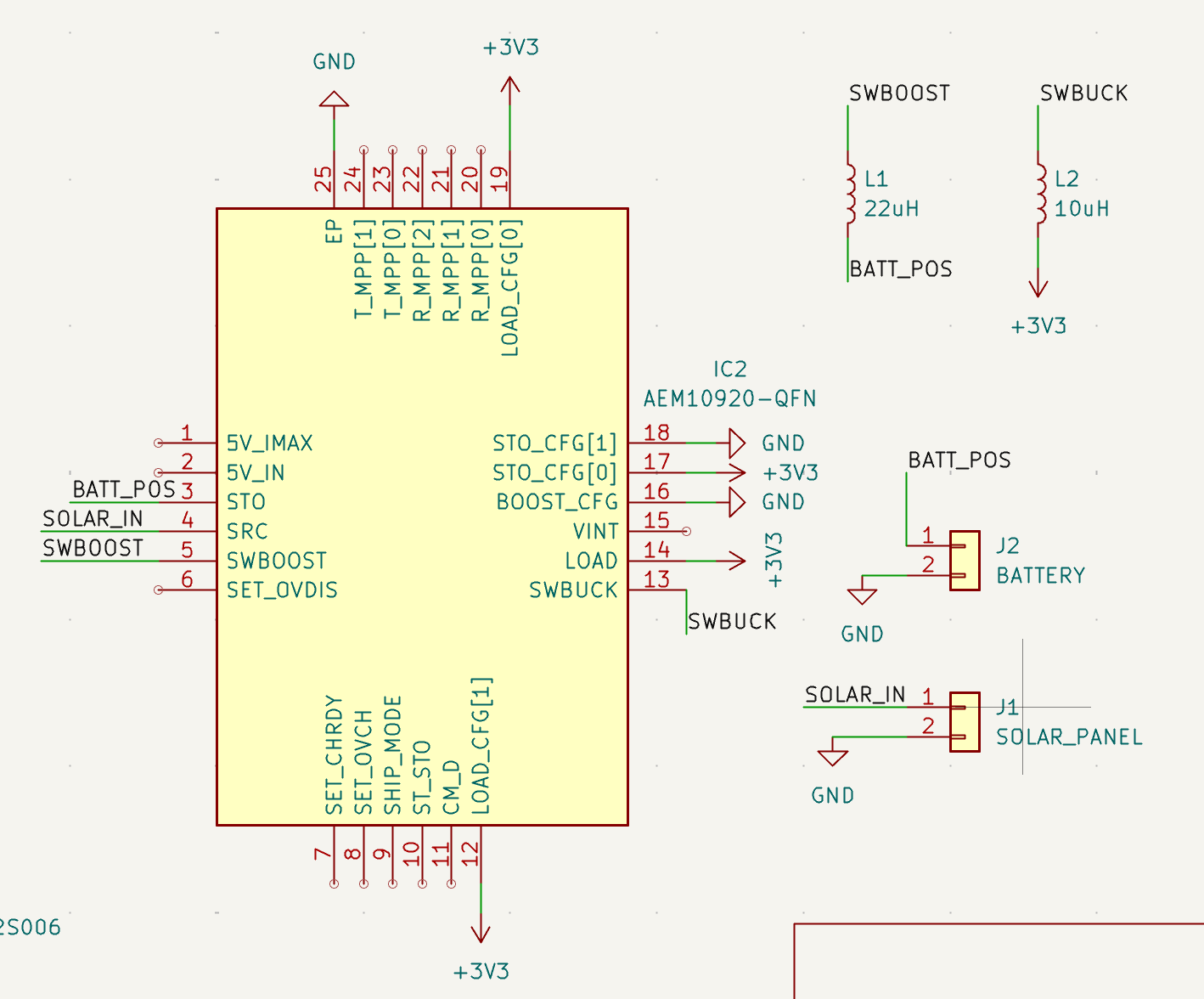
The power design uses an AEM10920 energy-harvesting chip between the solar panel, battery, and electronics. The schematic below shows that part of the system. Learning how charging, voltage regulation, and battery protection fit together became a project of its own.
The firmware has to make the same tradeoffs. When should it take a position fix? How often should it report? How long should it keep trying if the network isn’t available? Every extra update spends some of the battery, so “send more data” is a hardware decision too.
Getting a message off the ranch.
NTN stands for non-terrestrial network: the communications link goes through a satellite. Finding a position with GPS and sending that position home are two different jobs. The tag needs to do both.
I learned about satellite communication, including Starlink and the different approaches to connecting small devices. This design targets Skylo’s NTN service using the nRF9151. The prototype firmware starts with LTE-M cellular connectivity; the satellite transport is still work in progress.
This is the hardware behind Open Range Systems’ cattle-tag project. The drawings here are design artifacts. Long-term battery life and reliability on an animal are things to prove in the field.
I wanted to make something useful for my grandma. I ended up learning a lot about radios, circuit boards, and how many decisions fit inside an ear tag.
EXPLORE THE CATTLE TAG